
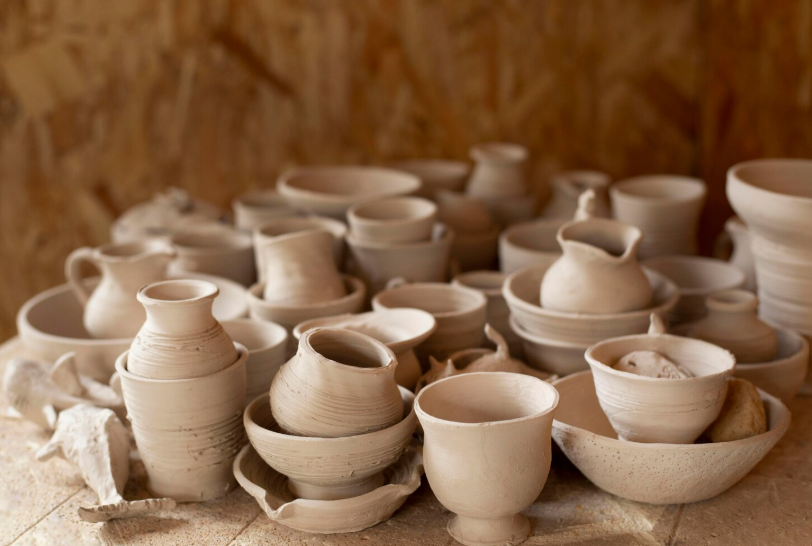
The Art of Handmade Ceramics: Every Curve Tells a Story

The Human Side of Handmade Ceramic
In a world where everything is mass-produced to perfection, the simple knowledge that one is holding a handmade ceramic object is in itself a source of immense comfort. The slight imperfection in the edges, the gentle curve that has been created by human hands, the unpredictable flow of the glaze – all these things are telling a story. Handmade ceramics are more than just objects; they are a symbol of patience, culture, and human touch.
At Mahaguthi, this human story is at the heart of every handcrafted product.
Handcrafted Ceramics: More Than Just Beautiful Objects
In a world where mass production is the norm, handmade ceramics are a welcome respite. Each piece is one-of-a-kind. A slight variation in shape, a natural curve of the glaze, a subtle asymmetry – these are not defects, but qualities.

Each handmade ceramic product carries:
- The touch of human hands
- Hours of careful labor
- Skills passed down through generations
- A personal story behind its creation
The Woman Behind the Wheel

For many women artisans in Nepal, ceramics are not just art — they are a path to independence.
Let us take the example of a young mother who had fewer sources of income. After training in skills and fair employment, she is able to learn the art of ceramic making. As time passes by, her products not only stay within her village but also reach homes in Nepal and the world. Every bowl she makes brings her dignity, confidence, and financial stability.
This is where Mahaguthi’s role becomes deeply meaningful.
Mahaguthi: Crafting Livelihoods Through Fair Trade
Mahaguthi is a Fair Trade organization in Nepal that aims to provide socio-economic empowerment to disadvantaged sections of society, especially women artisans, through the production, marketing, and export of traditional Nepali crafts.
For over decades, Mahaguthi has been a bridge between talented artisans and concerned consumers by:
- Providing fair wages and safe working conditions
- Supporting women’s economic empowerment
- Preserving traditional Nepali craftsmanship
Handcrafted Ceramics as Cultural Storytellers

Handmade ceramics have a rich history in culture. The patterns, designs, shapes, and colors can include:
- Local traditions
- Religious symbolism
- Daily village life
- Natural landscapes
When you use a handmade ceramic mug or plate, you are not only using a product, you are part of a living culture.
Mahaguthi has been committed to preserving and promoting such expressions of culture through fair trade in Nepal.
Why Choosing Fair Trade Handmade Ceramics Matters
When you choose fair trade handmade ceramics, you are supporting:
- Ethical production over exploitation
- Sustainable livelihoods over temporary labor
- Women’s empowerment over inequality
- Culture over uniformity

Your choice has a direct effect on real-life situations.
A cup becomes more than a cup.
A plate becomes more than a plate.
It becomes part of someone’s journey toward dignity and independence.
Every Curve Still Tells a Story

The next time you pick up a piece of handmade ceramics, take a moment to appreciate it. Feel the shape. Notice the glaze. Think of the hands that made it.
Behind that simple object is a woman, a community, a tradition, and an organization such as Mahaguthi that is working behind the scenes to make craftsmanship a force for good.
Because at Mahaguthi, every shape really does tell a story – of empowerment, of fairness, of hope.
Add a review
Your email address will not be published. Required fields are marked *